

Hey {{first_name | Boss}}!
Let's talk about something many entrepreneurs don't realize until they're completely overwhelmed: their business depends on them for almost everything.
From answering customer questions to making decisions and handling daily operations, it can feel like nothing gets done unless you're personally involved.
Being hands-on is great when you're starting out, but if your business can't function without you, you've built yourself a job instead of a business.
The good news? You can change that! Today, let's look at four warning signs that you're becoming the bottleneck and what you can do to build a business that doesn't need you every minute of the day.
“Why did the entrepreneur bring a notebook to the garden? Because they didn't want to miss a single growth opportunity.”
4 signs your business depends too much on you

Being involved in your business is one thing. Being responsible for absolutely everything is another. Here are four signs it's time to step back and build a business that can operate without your constant attention.
1: Every decision needs your approval
If your team constantly comes to you for answers, even for small everyday decisions, you're probably slowing things down without realizing it. When every little thing needs your approval, your business can only move as fast as you can respond.
Take the pressure off yourself by creating clear guidelines and giving your team more ownership.
What to do:
Identify the recurring decisions your team regularly asks you to make, so you can spot which responsibilities are unnecessarily landing on your plate.
Create simple guidelines explaining what your team can decide independently and when they should escalate an issue, so everyone knows their boundaries.
Set spending limits or decision-making authority for specific roles, so your team can solve problems faster without waiting for your permission.
2: You can't take a day off without everything falling apart
If taking a vacation means constantly checking emails, answering messages, and putting out fires, your business has a dependency problem. Your time away should be a break, not another workday in disguise.
Building reliable processes helps your business keep moving even when you're unavailable.
What to do:
List the daily and weekly tasks that must happen for your business to operate, so you can identify which responsibilities need coverage when you're away.
Assign a backup person to handle essential tasks and give them the information they need, so operations don't stop when you're unavailable.
Schedule a short trial day where you deliberately stay out of routine operations, so you can uncover gaps and fix them before taking a longer break.
3: You're the only one who knows how things work
Do you keep important information, processes, and client details in your head? If nobody else knows how to complete essential tasks, your business is relying on your memory instead of a repeatable system.
Documenting your processes makes it easier to delegate, train new team members, and maintain consistency.
What to do:
Choose your five most frequently repeated business tasks and write down the steps required to complete each one, so important knowledge isn't trapped in your head.
Create simple checklists, templates, or screen recordings showing how each task should be done, so someone else can follow the process without constant guidance.
Store all your instructions and resources in one shared location, so your team can quickly find the information they need without interrupting you.
4: You're too busy working in the business to work on it
When your entire day is consumed by emails, scheduling, customer support, and administrative work, there's little time left for growth. You're keeping the business running, but you're not giving yourself enough room to improve it.
Your job as a business owner should gradually shift from handling every task to building something bigger.
What to do:
Track how you spend your working hours for one week and identify repetitive, low-value activities, so you can see where your time is going.
Choose three tasks that can be automated, delegated, or simplified and implement the changes, so you can reduce your daily workload.
Block dedicated time on your calendar each week for strategy, planning, and business development, so growth doesn't always take a backseat to daily operations.
Speed it up with AI
You don't have to figure out every system from scratch. AI can help you identify bottlenecks, document processes, and make delegation easier. Here's how to get started:
1. Audit your workload with AI
Paste a list of your daily responsibilities into ChatGPT and ask:
"Analyze these tasks and identify which ones I should continue handling, delegate, automate, or eliminate. Explain why and prioritize the easiest opportunities to reduce my workload."
2. Turn repetitive tasks into SOPs
Take a screen recording or write down how you complete a recurring task. Give the instructions to AI and ask it to turn them into a simple step-by-step standard operating procedure (SOP) that someone else can follow.
3. Create a delegation plan
Ask AI to review your task list and organize responsibilities by role. Have it create a delegation checklist that explains who should handle each task, what they need, and when to escalate problems.
4. Build your weekly owner schedule
Tell AI your current responsibilities, business goals, and available working hours. Ask it to create a weekly schedule that protects time for strategic work while leaving room for essential operations.
The goal isn't to use AI to do more work. It's to use AI to help you stop doing everything yourself!
Straight from the feed
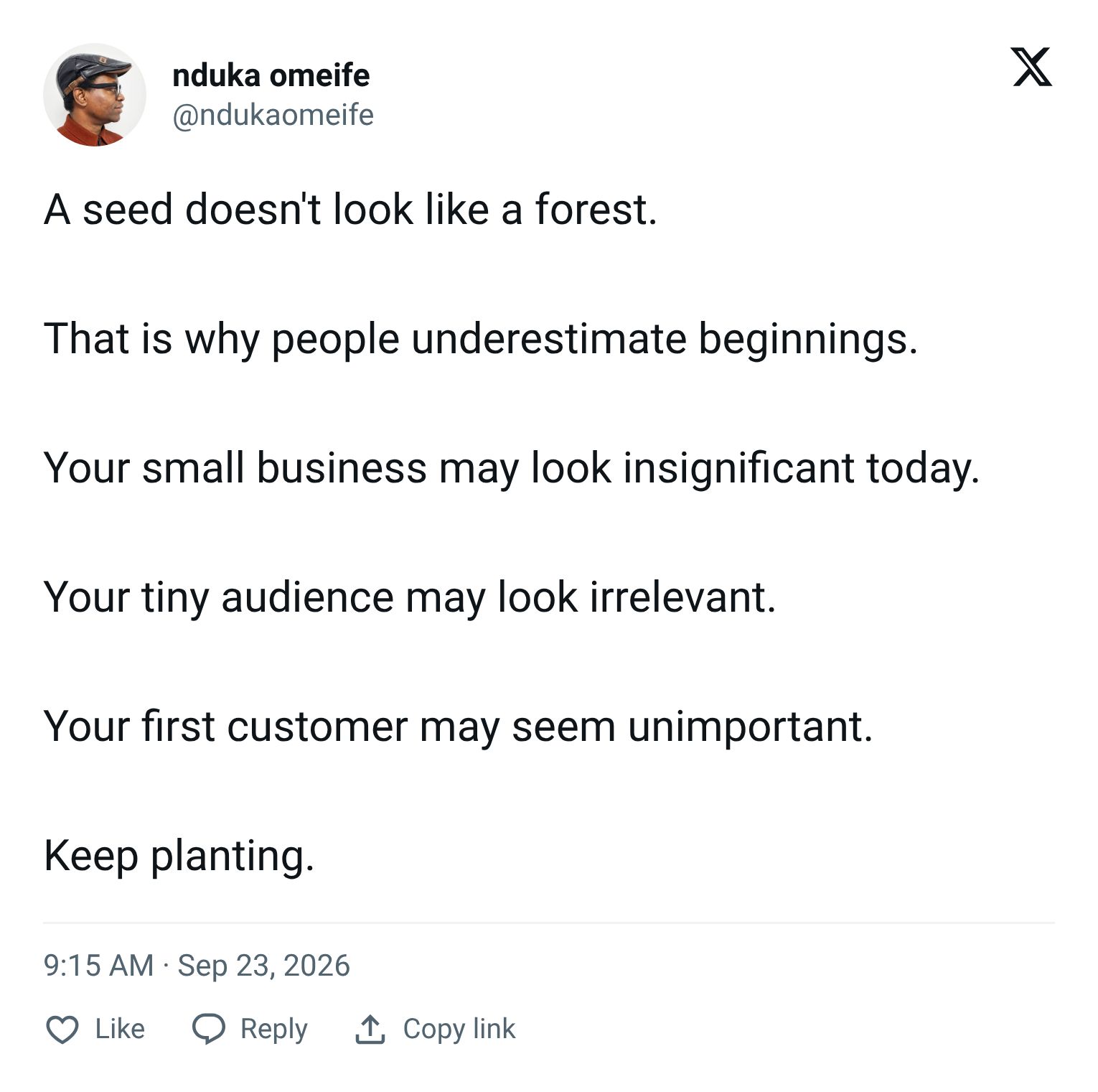
Small beginnings can compound into something significant, so consistency matters more than how things look at the start.
Handy resources
Here are some resources to help you build a business that runs more efficiently:
Your business can’t run without you
Founder-dependent business
Seven Signs Your Business Still Relies Too Heavily on You
Catching you up on the latest


Quick recap
Building a successful business isn't about becoming the person who does everything. It's about creating systems, empowering your team, and making sure the important things get done even when you're not around. If every decision, task, and customer interaction depends on you, it's time to start making changes.
So, take a step back, identify what's holding you back, and start building a business that gives you more freedom instead of demanding more of your time. After all, you started a business to create opportunities, not to become its full-time bottleneck!
~ Justin and the BLAB team
Try Book Like A Boss for Free 👊

Try BLAB free - no catch, no hook, no commitment. See if you like it. What do you got to lose? (Other than all that back-and-forth scheduling stress, of course …).
